Over 100 Political Prisoners Released and Expelled from Belarus as the U.S. Lifts Potash Sanctions
Belarus Freedom Forum welcomes 123 Belarusian political prisoners and nationals of Lithuania, Latvia, Poland, the U.S., Australia, Japan, and Ukraine, including high-profile Belarusians Ales Bialiacki, Maria Kalesnikava, Viktar Babaryka, Maksim Znak, and Pavel Seviarynets, who have finally been released from Lukashenka’s prisons.
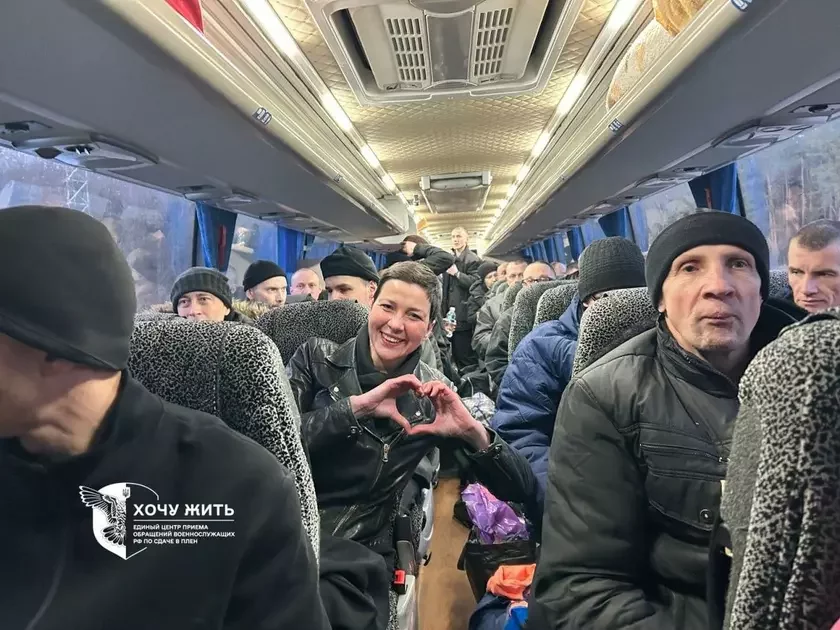
Belarusians are thankful to President Trump and the U.S. Government for the diplomatic initiative to facilitate the release of the Belarusian political prisoners. We are grateful to Ukraine and President Zelenskyy for receiving and providing assistance and medical care to 114 Belarusian political prisoners. We will forever appreciate Lithuania and Poland for providing shelter and support to Belarusian political exiles.
The December 13 release was achieved through diplomatic efforts by the U.S. Government, ongoing activism by the Belarusian democratic movement, and international pressure. As part of the agreement, the U.S. lifted sanctions on Belarus’ potash exports, while Lukashenka demanded the deportation of prisoners from Belarus as one of the conditions for their release.
Today, our joy is bittersweet. 4,288 political prisoners should not have been deprived of their freedom in the first place, as they suffered injustice and deprivation solely for exercising their fundamental rights to freedom of speech and assembly, proclaimed by the Constitution of the Republic of Belarus. 1,110 political prisoners are still behind bars, 10 of whom were designated as political on December 10, just a few days before the negotiations between John Coale, the U.S. Special Envoy for Belarus, and Lukashenka.
As we have written earlier, none of the releases of the political prisoners has constituted a policy change and the end of political repression in Belarus. Lukashenka is as determined as ever to quell any independent thought or action stemming from anyone but him. Lukashenka has turned anything — political prisoners, diplomacy, alliances, education, judicial, parliamentary, military, and security systems — into tools to retain and enhance his personal power. In Lukashenka’s system, political prisoners have become a convenient bargaining tool.
While seeking to legitimize his regime and improve its economic outlook, Lukashenka trades political prisoners for sanction relief, trades in Belarus independence to Russia, continues supporting Russia’s criminal war in Ukraine, militarizes Belarusian society, and conducts hybrid operations against NATO countries, escalating tensions with Lithuania and Poland.
We hope today’s diplomatic advance leads to the unconditional release of political prisoners, an end to political repression, disengagement of Belarus from cooperation with Russia in its criminal war in Ukraine and aggression against NATO. Given the current political context and the Lukashenka regime’s historical record, we recognize that any gains from engaging with Lukashenka would be tactical rather than strategic. However, any positive developments would reduce the risk of military escalation from Belarus, decrease security threats to Ukraine, Poland, Lithuania, and Latvia, and might improve the political and social conditions in Belarus.
We ask the U.S. Government to maintain pressure on Lukashenka. Sanctions relief should reward the Lukashenka regime’s genuine actions to free political prisoners and stop threatening NATO allies, but must not undermine pressure on Russia for its aggression against Ukraine and NATO countries. We also request a mechanism to swiftly reinstate sanctions if Lukashenka fails to fulfill his promises.